Podcasts This Week (January 3, 2011)

Do you want to improve your English in 2011?

Reach your goal more quickly by becoming a Basic or Premium Member. The Learning Guide gives you help with every podcast: More vocabulary, explanations of new words and phrases,  help with comprehension, cultural information, and much more!

___________

ON MONDAY
ESL Podcast 648 – Working on Commission

In the Learning Guide: Get a full transcript (written version of every word you hear), vocabulary list and sample sentences, and comprehension questions.
In “What Else Does it Mean,” learn the other meanings of “to coast” and “cap.”
In the “Culture Note,” learn about “The Types of Professionals Who Commonly Work on Commission.”
“Many salespeople work on commissions. This is because the “payment arrangement” (the way people are paid) “aligns” (makes things work together in the same direction or for the same purpose) the interests of the company and…” – READ MORE in the Learning Guide

ON WEDNESDAY
English Cafe 275

Topics:  American Presidents:  George Washington; SeaWorld; power versus force; The Hurt Locker and Inglorious Basterds; How bad can it get?

In the Learning Guide:  Get a full transcript (written version of every word you hear).
In “What Insiders Know,” you will read about “The White House Press Secretary and White House Briefings.”
“The media—newspapers, news magazines, television and radio news, and Internet news websites—are an important part of a democracy.  The media or press is expected to act as a “watchdog” of the government…” – READ MORE in the Learning Guide

ON FRIDAY
ESL Podcast 649 – Disliking a Sibling’s Boyfriend/Girlfriend

In the Learning Guide: Get a full transcript (written version of every word you hear), vocabulary list and sample sentences, and comprehension questions.
In “What Else Does it Mean,” learn the other meanings of “clingy” and “to count.”
In the “Culture Note,” learn about “Famous American Sibling Rivalries.”
“American literature, television, and movies “are filled with” (have many) “sibling rivalries” (tense relationships between brothers and sisters). For example, one popular television show, The Simpsons…” – READ MORE in the Learning Guide

Posted in Announcements | 9 Comments

The Poor Beautiful Horse


QUESTION:

Elena from Russia asks: “I’ve been listening your podcasts since last spring and I have a question about the word “horse.” Why do you use this beautiful harmless animal in some kind of, I suppose, insulting phrases? For example, you have a phrase “get off your high horse” and another, “clothes horse,” which is also very unpleasant for women. And maybe you have some others with “horse”? Could you tell about them plus the meanings, of course.

ANSWER:
It’s certainly true that “horse” appears in a number of idioms and phrases that are not complimentary (showing praise or approval), and Elena has pointed out two we’ve included in our podcasts:  “to get off (one’s) high horse” (ESL Podcasts 324 & 615) and “clothes horse” (ESL Podcast 619).

When I did a search of our past podcasts, I found that “horse” actually appears in a quite a few of the phrases we’ve used and explained.  Either we have an usual love for horses here at ESL Podcast, or there are simply a lot of phrases and idioms that include horses.  Since I’ve only ridden a horse twice in my life and Jeff tells me he’s never been on a horse, I’m inclined to (tend to) think that it must be the latter (second) explanation.

You may be interested in these other horse-related idioms:

“to put the cart before the horse” (English Cafe 211)
“a wild horse couldn’t drag (one)” (ESL Podcast 370)
“to look a gift horse in the mouth” (ESL Podcast 489)
“I could eat a horse” (ESL Podcast 629)

These are not all of the horse-related idioms in the English language by any means (at all), but they’re some of the more commonly-used ones. Depending on the context (situation), most of these are neutral (not good nor bad).  Let’s see if I can use all six idioms in a little story:
__________

For three days and three nights, Jeff didn’t return home.

On the fourth night, he stepped through the front door of his house and his wife, a clothes horse, said, “Where have you been and why are you wearing my new dress?”

Hold on (stop) a minute,” Jeff responded.  “Let’s not put the cart before the horse.  I haven’t eaten for three days and right now, I could eat a horse!  Go make me some dinner.”

Jeff’s wife looked at the ripped (torn; damaged) dress and said: “A wild horse couldn’t drag me into the kitchen to make you dinner before you’ve explained why you’ve been missing for three days and why you’re wearing my dress.”

Jeff, looking tired and frustrated, said: “You’re looking a gift horse in the mouth.  Isn’t it enough that I’m home and I’m not hurt?”

“You’ve been missing for three days.  You haven’t called me or texted me, and now you’re behaving like I should just be grateful that you’re back.  You need to get off your high horse, Jeff, and explain yourself!”
__________

Okay, it’s not really a story, but you get the idea.  Are there phrases or idioms in other languages involving horses?  Are they positive, negative, or neutral?

By the way, I don’t know where Jeff has been.  Maybe we should ask him, or perhaps you can guess?

~ Lucy

Posted in Language & Terms | 19 Comments

Podcasts This Week (December 27, 2010)

If you like ESL Podcast, please support us by becoming a Basic or Premium Member. We’re grateful for your help in keeping ESL Podcast going!

………………………..

ON MONDAY
ESL Podcast 646 – War-Related Disabilities

In the Learning Guide: Get a full transcript (written version of every word you hear), vocabulary list and sample sentences, and comprehension questions.
In “What Else Does it Mean,” learn the other meanings of “vet” and “limb.”
In the “Culture Note,” learn about “Services for Vets.”
“The United States Department of Veterans “Affairs” (issues; things someone is involved in) provides many types of financial support for American vets, and especially for vets who were injured while serving in the military and are now disabled…” – READ MORE in the Learning Guide

ON WEDNESDAY
English Cafe 274

Topics:  Famous Authors: Emily Dickinson; the Lindbergh kidnapping; sure versus of course versus certainly; either; Imma be

In the Learning Guide:  Get a full transcript (written version of every word you hear).
In “What Insiders Know,” you will read about “Dognapping.”
“Kidnapping is a crime that we are all familiar with, but have you heard of dognapping?  Dognapping is the stealing of dogs from their owners who are then required to pay a ransom to get the dog back…” – READ MORE in the Learning Guide

ON FRIDAY
ESL Podcast 647 – Using a Smartphone

In the Learning Guide: Get a full transcript (written version of every word you hear), vocabulary list and sample sentences, and comprehension questions.
In “What Else Does it Mean,” learn the other meanings of “camera” and “touch.”
In the “Culture Note,” learn about “Consumer Proprietary Network Information.”
“Whenever an American “consumer” (customer) makes a telephone call, “data” (information) about that call is added to the consumer proprietary network information (CPNI). All the “telecommunications companies”…” – READ MORE in the Learning Guide

Posted in Announcements | 7 Comments

You Got What for the Holidays?!

Since Jeff and many of you have been talking about gift-giving, I thought I’d weigh in (give my opinion) on the subject. It’s only my two cents (my unimportant thoughts), so take it for what it’s worth (don’t give it too much importance or significance).

About 10 years ago, I made a decision.  After running around and stressing out (feeling emotional pressure or tension) to find the perfect gift by Christmas Eve, I decided that I would no longer give Christmas presents.  I told my family the next year not to expect any from me and to not buy any for me in return.

It was a controversial decision among my family members, but I got tired of trying to be thoughtful (showing kindness and consideration to other people) on a deadline.  I found myself starting earlier and earlier each year — first November and then October — making my lists and racking my brain (trying very hard) to think of that perfect gift that would please each member of my family.  Perhaps because I dislike shopping so much, each year I came to dread (having the feeling of not wanting to do something) it more and more.  Not only did I dread the shopping, I started to dread the entire holiday season because of what it represented to me: frantic (feeling panicked) buying and endless commercialism (focus on buying/selling and making money).  In the end, I gave up (didn’t try anymore) and I told my family they should give up on me as well.

The only exception (something that doesn’t follow the rule) I make is to give my niece (my sister’s daughter), who is still young, holiday money each year to buy whatever she wants.  She’s happy and so am I.

That’s not to say that I don’t give gifts at all.  My family, especially my mother, has become accustomed to (adjusted to) getting a gift from any time of year.  If I see something I think she’ll like, I’ll buy it and sent it to her, no matter what time of year it is.  For me, that makes the most sense.  I was thinking of her right at that moment and I wanted her to know it.  She doesn’t seem to mind (to dislike it), so that has worked out (been acceptable; been successful).

I’m not saying that I don’t like receiving gifts either, of course!  The strangest gift I’ve ever received, however, was a set of facial cleanser (liquid cleaner for the face) from a student, and a male student at that (in addition)!  Of course I thanked him and appreciated the thought (sentiment; feeling), but it left me wondering if he was trying to tell me something.  It’s true that he had to stare (look directly) at my face for an hour a day, three times a week, so that may not be too surprising!

What’s the strangest gift you’ve ever received?

~ Lucy

Posted in Life in the United States | 32 Comments

Podcasts This Week (December 20, 2010)

What to give Cousin Bette and Uncle Vanya for the holidays? Give them the gift of English!

And have you been a good boy or girl this year, too? Give yourself the gift of English, too.  You deserve it!

You can support us and help your friends and family by giving them ESL Podcast Gift Certificates. Use Gift Certificates for Basic or Premium Memberships, Learning Guides, and Premium Courses!

………………………..

ON MONDAY
ESL Podcast 644 – Giving a Successful Presentation

In the Learning Guide: Get a full transcript (written version of every word you hear), vocabulary list and sample sentences, and comprehension questions.
In “What Else Does it Mean,” learn the other meanings of “hit” and “hooked.”
In the “Culture Note,” learn about “Popular Presenters on the Speakers Circuit.”
“…People in the professional “speakers circuit” (all the people who travel around the country and the world making presentations to earn money) can attract hundreds or thousands of listeners each time they speak…” – READ MORE in the Learning Guide

ON WEDNESDAY
English Cafe 273

Topics: It’s a Wonderful Life; Cape Cod; backward versus backwards; to agree with versus to agree to versus to agree on; howdy

In the Learning Guide:  Get a full transcript (written version of every word you hear).
In “What Insiders Know,” you will read about How the Grinch Stole Christmas!
“Christmas is a time for “traditions” (things done the same way over time). People put up Christmas trees and watch the classic movie It’s a Wonderful Life on television. Another Christmas tradition is for the family to read with their children the book How the Grinch Stole Christmas!…” – READ MORE in the Learning Guide

ON FRIDAY
ESL Podcast 645 – Shaving Your Face

In the Learning Guide: Get a full transcript (written version of every word you hear), vocabulary list and sample sentences, and comprehension questions.
In “What Else Does it Mean,” learn the other meanings of “shave” and “nick.”
In the “Culture Note,” learn about “Popular Products for Shaving.”
“Most American men “stick to the basics” (use only the simplest things) when it comes to shaving: a can of shaving cream and a razor. However, there are many other shaving products that men can purchase to help them shave their face or “maintain” (keep in good condition) a beard…” – READ MORE in the Learning Guide

Posted in Announcements | 12 Comments

The Wanderers

When I was teaching adult ESL students, I would often begin a get-acquainted (getting to know each other) discussion by asking two questions. The first was “how would you describe yourself? Are you a Mexican (or Korean or….) living in the U.S., a Mexican-American, or an American of Mexican descent (nationality; where your family came from).”

The second question was “how do you think you’ll describe yourself five years from now?” As you can imagine, we had some very interesting discussions.

These discussions always reminded me (made me think) of my ancestors (family members who lived many years ago) and the path they took to the U.S. and into American life and culture. I recently saw an interesting description of them that was written at the time they arrived in the U.S. The writer said they were “ethnically Dutch, culturally German, and nationally Russian.” What he meant is that my ancestors were Dutch people who had lived in Prussia, or northern Germany, long enough to pick up German cultural traditions, including the German language. And, at the time they moved to the U.S., they were Russian citizens.

As you can see, my ancestors moved around. In fact, one writer refers to them as wanderers (without a permanent home). Let me see if I can condense (shorten) their story into a few paragraphs.

My ancestors came originally from a region (area) of Holland called Friesland. Most were farmers and some, possibly (maybe), were teachers.

Sometime near the end of the 1500s, the Prussian government invited them to move to an area west of Danzig, which is now Gdansk, Poland. They were given religious freedom and some very bad farmland – most of it was wilderness (never been developed) and marshes (ground that is always wet). In a few years, however, they turned the land into productive farms.

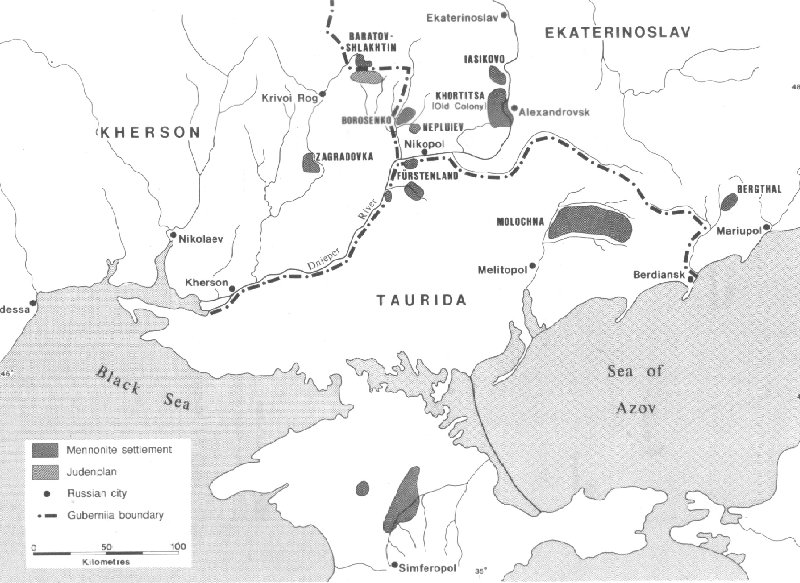
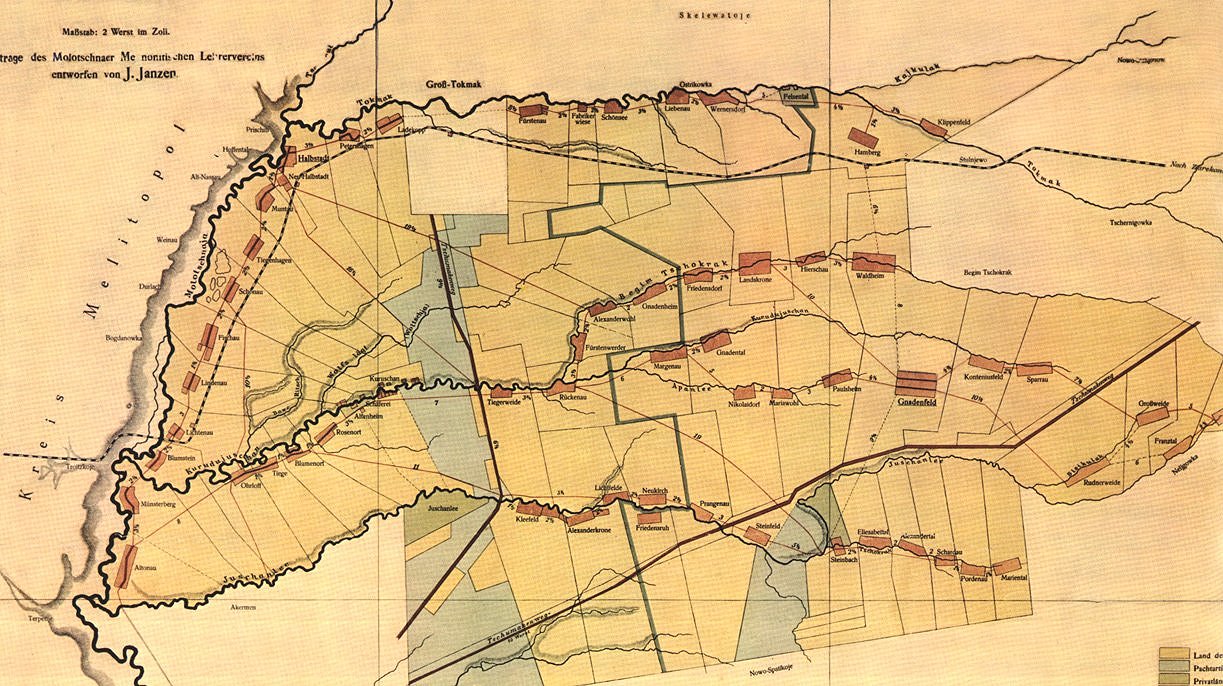
Later, around 1800, the Russian government invited these hard-working farmers to move to the southern Ukraine , near the Molotschna River, to help develop farming (agriculture) there. They were offered (told they could have) religious freedom and freedom from serving (working) in the Russian army. In addition, the government helped pay for the cost of moving. Today, if you visit southern Ukraine, you’ll find large wheat farms that they started. And you can still find many of the villages they lived in.

By the late 1800s, it was obvious (everyone knew) that the life these people enjoyed in Russia would soon end, so they began to look for a new home. They looked at locations in Canada, the U.S., Mexico, and South America. Most of them came to the U.S. around 1875 and settled (started living) in Kansas, in the center of the U.S. Kansas was on the American frontier (where no one had lived before) at that time, so these farmers did what they did best – make something grow where nothing had grown before. If you travel through this part of the U.S. today, especially in the summer, you’ll see miles and miles of wheat farms, the same as in the Ukraine.

Christmas also reminds me of my ancestors and our traditions. I have fond (like very much) memories of gathering (getting together) at my grandparents’ homes at Christmas with uncles, aunts, and cousins. Two of my fondest memories are the food and the music. We’d always eat a large Christmas dinner together and then gather around the Christmas tree in the living room to sing Christmas carols. What wonderful music!

Next week my family will repeat part of the tradition. Even though my children are very American, they love the traditional food and insist on having it every Christmas.

Three foods are always at the top of our list of favorites. First, there are zweibach, a kind of bread or dinner roll usually eaten with jam. Then there is pluma mos, a fruit soup made of raisins and prunes cooked slowly in a sweet cream sauce flavored with cinnamon and other spices. And finally, there are peppernuts, small hard cookies flavored with ginger, cinnamon and, yes, a little pepper. Any day now, I expect the UPS (United Parcel Service) man to ring our doorbell ring so he can deliver the box of peppernuts my mother sends every year.

For those of you who celebrate Christmas, merry Christmas from me and my family. For those of you who don’t, I wish you a very happy holiday season. And to all of you – in advance – Happy New Year!

~ Warren Ediger, creator of Successful English where you can find clear explanations and practical suggestions for better English.

photo from Molotschna colony, Ukraine, from GAMEO

Posted in Life in the United States | 33 Comments

Podcasts This Week (December 13, 2010)

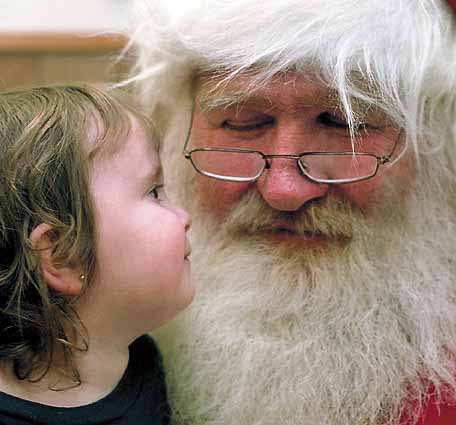
You: “I want to improve my English.”
Santa: “No problem. I’ll give you
ESL Podcast Gift Certificates!”

Give yourself the gift of English with an ESL Podcast Basic or Premium Memberships!  Give your friends ESL Podcast Gift Certificates, which can be used for Basic or Premium Memberships, Learning Guides, and Premium Courses!

………………………..

ON MONDAY
ESL Podcast 642 – Installing Windows and Doors

In the Learning Guide: Get a full transcript (written version of every word you hear), vocabulary list and sample sentences, and comprehension questions.
In “What Else Does it Mean,” learn the other meanings of “slide” and “stuck.”
In the “Culture Note,” learn about “Government Programs to Encourage Use of Energy-Efficient Appliances.”
“In recent years, the U.S. government has tried to encourage Americans to install “energy-efficient” (using the smallest amount of energy possible) “appliances” (electrical equipment in a home) in their home to reduce the country’s “dependence”…” – READ MORE in the Learning Guide

ON WEDNESDAY
English Cafe 272

Topics:  Famous Songs:  God Bless America and Kate Smith; The American Girl Dolls; provided that versus as long as; “g” as in “gansta”; to suck

In the Learning Guide:  Get a full transcript (written version of every word you hear).
In “What Insiders Know,” you will read about “Bobblehead Dolls.”
“Many sports “franchises” (organizations that include many teams) want to attract sports fans and to get them to buy tickets to the games.  One way to do this is to offer special “promotions”…” – READ MORE in the Learning Guide

ON FRIDAY
ESL Podcast 643 – Liberal and Conservative News

In the Learning Guide: Get a full transcript (written version of every word you hear), vocabulary list and sample sentences, and comprehension questions.
In “What Else Does it Mean,” learn the other meanings of “rag” and “press.”
In the “Culture Note,” learn about “Biases of TV Cable News Channels.”
…”In the United States, many “cable news channels” (TV channels that cover the news all the time) are accused of being unfairly liberal or conservative. These channels present only one “side” (way of viewing or thinking about things) of the story…” – READ MORE in the Learning Guide

Posted in Announcements | 9 Comments

Person of the Decade

This is the time of year when the media takes a retrospective look (look back in time) at the past year. News outlets (places where we can find news), such as Time magazine, like to name (identify) a “Person of the Year,” someone who has made significant or important impact (influence; effect) on the world, good or bad, during the past year.

Since a decade (10-year period, beginning with a year ending in ‘0’) is ending, many people are taking a look back at the past 10 years: 2000 to 2010. My question to you is:  Which person do you think has made the most significant impact — good or bad — on the world in the past decade?   This person does not need to be politician (person who works in an elected job in the government), of course, and may be an entertainer, sports star, businessperson, or anyone who you think fits the bill (satisfies the requirements; meets the criteria).

Here are a few of the names that have bandied about (discussed in a casual way) in the American media that I’ve seen in the past few weeks. This is not an exhaustive (complete) list and most are Americans, but it’s a place to start.  Remember that we’re talking about a person who has had the biggest impact, positive or negative.

Barack Obama, American President
Steve Jobs, co-founder of Apple
Sarah Palin, former Alaskan governor and 2008 Republican vice-presidential candidate
Julian Assange, founder of WikiLeaks
Lady Gaga, American pop singer

So, what do you think?  Would you pick one of these people or someone else entirely?  Who would be your “Person of the Decade”?

~ Lucy

P.S. At the risk of sounding presumptuous (seeming arrogant, or thinking too highly of ourselves), some of you may want to be kind to us here at ESL Podcast and pick our own Dr. Jeff McQuillan, but he would be the first person to tell you to leave him off the list, of course!

Posted in News and Current Events | 28 Comments

Advertising in Schools

You are a public school principal (director) and school funding (money) is down. You have a difficult choice: Eliminate (cut) the school’s music, art, or sports program or allow advertisements to be place in the school. What would you do?

That’s the dilemma (difficult problem or decision) facing many schools in the U.S. today. With a poor economy comes less governmental funding, and advertisers are offering schools an alternative (another choice) to eliminating educational programs. Advertisers want to put advertising in schools, placing them on school lockers (metal boxes where students keep books and supplies) and on the side of school buses.

More and more schools are feeling desperate (hopeless; without other options) and opting for (choosing) advertising.  For example, in a school district (organization of many schools in one area) in St. Francis, Minnesota, the superintendent (director responsible for a district) agreed to cover 10% to 15% of the school’s lockers with ads. Parents don’t like it, but have not been too vocal (expressing an opinion aloud or loudly) because they know of the poor condition of school funding.

Advertisers, of course, love this form of advertising. School advertising reaches children and teenagers, an important demographic (specific group or part of the population) and the students are a captive audience (cannot leave or avoid what they see or experience).

What do you think of this form of advertising? What if the choice was between eliminating upper-level (advanced) math or science courses and school advertising?  Would your opinion be different?

Is there school advertising where you live? Are there other types of funding for schools?

~ Lucy

Posted in Business, Life in the United States | 29 Comments

Podcasts This Week (December 6, 2010)

Give the gift of English! No long lines at the stores. No gifts to wrap.

You can support us and help your friends and family by giving them ESL Podcast Gift Certificates.  Use Gift Certificates for Basic or Premium Memberships, Learning Guides, and Premium Courses!

………………………..

ON MONDAY
ESL Podcast 640 – Being Genuine and False

In the Learning Guide: Get a full transcript (written version of every word you hear), vocabulary list and sample sentences, and comprehension questions.
In “What Else Does it Mean,” learn the other meanings of “upfront” and “open.”
In the “Culture Note,” learn about “Terms Used for Counterfeit Things.”
“There are many “counterfeiters” (people who try to make money, documents, and other things look real when they aren’t) who try to “fool” (trick; make someone believe something that isn’t true) people into buying things that are not genuine…” – READ MORE in the Learning Guide

ON WEDNESDAY
English Cafe 271

Topics:  Ask an American: Latinos in Higher Education; may versus might; per se; it pays to (be)

In the Learning Guide:  Get a full transcript (written version of every word you hear).
In “What Insiders Know,” you will read about “The Military Campus Recruiting Controversy.”
“Branches” (parts) of the U.S. “military” (the people and organizations that work to defend the country) often “recruit” students on college campuses, trying to “generate” (create; produce) interest in military “service” (a period of time spent working in the military)…” – READ MORE in the Learning Guide

ON FRIDAY
ESL Podcast 641 – Sharing With Others

In the Learning Guide: Get a full transcript (written version of every word you hear), vocabulary list and sample sentences, and comprehension questions.
In “What Else Does it Mean,” learn the other meanings of “fair” and “pile.”
In the “Culture Note,” learn about “How American Parents Teach Their Children to Share.”
“Many young children “struggle” (have a hard time doing something) to share their toys with friends. They become very “possessive” (wanting to own something fully, without sharing it with others) of their toys and “throw tantrums”…” – READ MORE in the Learning Guide

Posted in Announcements | 11 Comments