Majority Minority

There was an interesting article in the newspaper this week about changes that are taking place in the U.S. population. According to a new report published by the Census Bureau (the part of the federal or national government that counts how many people there are in the United States), by the year 2042, the majority of Americans will no longer be white.

America will increasingly become a country where the majority are “minorities.” In U.S. English, the word “minority” is often used to describe those who are not white or of European descent (to have come originally from a place). Examples of a minority would include Hispanic/Latino, Asian Americans, Native Americans, and African Americans. But now in many cities in the United States — and soon in the entire country — more than 50% of the population will be members of one of these or another minority group.

Part of the reason for this change in the population has been the declining (decreasing) birth rates (the number of children a woman has) of European Americans, as well as the higher birth rates of other groups and the increasing number of immigrants.

This change has already taken place in many places such as Los Angeles, where only 30% of the population is classified as white or European American.

~Jeff

Posted in Life in the United States | 8 Comments

I Need to Go to the Restroom…Now!

QUESTION:
One of our listeners, Natalia, recently asked what the common and polite way is to say that you have to go to the bathroom.

ANSWER:
In the U.S., the most common terms are bathroom and restroom for the room with the toilet. In most U.S. homes, the room with the toilet is the same room where you’ll find the bathtub/shower and the sink. Even if it’s not, we still use these two terms.

The most common phrases we use are: “I need to go to the bathroom”/”I’m going to the bathroom” and the slightly more polite, “I need to go to the restroom”/”I’m going to the restroom.”

Other polite terms for the bathroom/restroom are the ladies’ room or the men’s room, and some women may use the terms powder room or the little girl’s room. However, “restroom” is fine in nearly all situations, so that’s the term I suggest using. In the U.S., you would very rarely hear anyone say, “I need to go to the toilet,” which is considered impolite and sounds a little strange to a native speaker, and Americans don’t use the terms “loo” and “W.C.” (water closet).

The most polite and formal ways to say you have to go to the restroom, however, does not mention the bathroom or restroom at all. At a formal gathering or at a business meeting, for example, most people would simply say, “If you’ll excuse me…” or “Excuse me” as they get up to go to the restroom.

In very, very informal situations, you may hear someone say, “I need to pee.” To pee is to allow urine (the water waste in your body) to come out. Again, this is very informal and impolite, so I don’t recommend ever saying this. I mention it in case you hear it in movies or on TV shows. Other very informal phrases you may hear are, “I need to go to the john.” The john is the toilet; and “I need to hit the can.” You guessed it–the can is the toilet.

I can’t believe I spent five paragraphs talking about the bathroom, but I hope this is helpful!

~ Lucy

Posted in Language & Terms | 17 Comments

Your Questions for the ESL Podcast Third Anniversary Video Podcast

anniversaryballoonbunch.jpgWe have celebrated our past two anniversaries by producing a video podcast. We want to do that again this year, but we need your help.

This year, Jeff will be answering listener questions. Do you have a burning question (something you want to know very much) about us or the podcast? If so, post a comment here and we will select a few to answer in the anniversary video podcast.

Thanks, in advance, for your help!

~ Lucy

Posted in Announcements | 67 Comments

Writing a Blog as Medicine

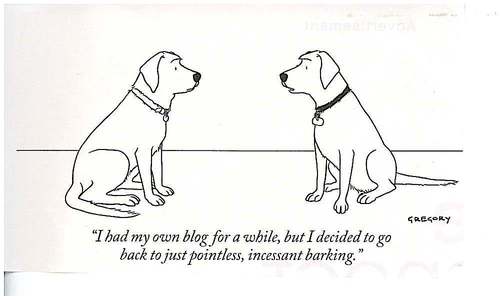
There are many types of blogs. The ESL Podcast Blog is one for learning. Other kinds of blogs are confessional, where people tell others about something they’ve done, often things that was a secret and/or wrong in some way. Many blogs give new information or breaking news (most recent news, happening right now) about politics, technology, and other topics. Still other blogs are a creative outlet, where people can post their imaginative and original works or ideas for others to see.dog-blog1.jpg

For some therapists (people or doctors who help people with mental or psychological issues and problems), blogs have another function. Therapists are telling their patients to blog as part of their treatment (medical care to make a person better).

Psychologists (scientists who study the mind) say that blogs are different from diaries because there is a built-in (inherent; as part of it) audience. As children, we learn that we can get help if we tell others about our problems. And as adults, we associate (connect) communication with getting consolation (comfort received after something bad happens). For this reason, psychologists say, blogging gives people their need for sympathy (others feeling sad for you), especially when there are major problems. Therapists say that blogging gets you closer to a sympathetic audience and that’s therapeutic (have a good effect on your body or mind). According to one psychologist, blogging, which can be anonymous (not identified by name so no one knows who you are), which gives it another therapeutic advantage: People can tell of intimate (private and personal) things without making themselves vulnerable (giving other people an opportunity to attack or harm them).

Would you consider starting a blog? If so, what kind of blog would it be and what would you write about?

~ Lucy

Cartoon: “I had my own blog for a while, but I decided to go back to pointless, incessant barking.”
pointless
= without purpose
incessant = with no end; without stopping
to bark = to make the loud sound a dog makes with its mouth when it “speaks”

Posted in Life in the United States | 8 Comments

What Are “Cooties”?

QUESTION:
Brian in the U.S. asked: What are “cooties”? I watch “Arthur,” the cartoon (show with animation (drawings)), every morning, and the characters often say, “You have cooties!” but I do not understand! Please help!

ANSWER:
Cooties are imaginary (not real) germs. Germs are the very, very small living things that we can’t see, but that can cause disease or illness.  To insult (to treat with disrespect) someone, you could say that they have cooties. Children like to say this to people they don’t like.  Like the word “germs,” we nearly always use “cooties” as a plural noun, almost never as a singular noun. Adults don’t usually use the word “cooties” unless they were trying to be funny.

~ Lucy

Posted in Language & Terms | 11 Comments

Poll: Which Superpower Would You Want?

super_friends.jpgIt’s summertime and the movie theaters are full of blockbusters (very successful; earning a lot of money) movies. The number 1 movie in the U.S. this week is The Dark Knight, a movie about Batman. I haven’t seen it yet, but I’ve read good reviews.
This got me thinking about when I was younger and how I wished I had superpowers, or powers and abilities that would allow me to do great things.

Here’s a poll question: If you could any superpower, which superpower would you want? If it’s not listed in the options, submit a comment and tell us what that power would be.

~ Lucy

[Poll=4]

Posted in Polls | 23 Comments

Is iTunes U for You?

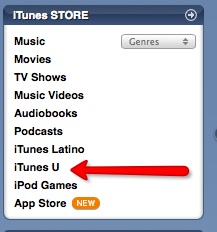
iTunes UAs some of you probably know already, iTunes has a special section for university lectures and classes.  Different universities, including some of the best in the United States, provide free lectures and demonstrations on a variety of topics from some of their best professors.  You can find the free courses by clicking on iTunes U in the menu of the iTunes Store.

These videos audio lectures are especially good for those of you studying for the TOEFL or IELTS exams, since you will get a lot of native speaker speech on topics similar to those found on the tests.  Of course, you want to start with a subject you know something about, and (with luck) a professor who speaks clearly.

For some useful advice on how to use iTunes U, take a look at Warren Ediger’s Successful English website where he has a special section on the TOEFL.

~Jeff

Posted in Recommendations, Technology | 10 Comments

“Summertime” by George Gershwin

We’re in the middle of summer and it has brought to mind (made me remember) the song “Summertime.” This is a song that was part of a well-known musical (show or movies with singing) called Porgy and Bess, and was written in 1935 by the famous composer (someone who writes music) George Gershwin. This song is now a standard, which is song that most people recognize and is played and performed a lot.

George Gershwin wrote this song to sound like a spiritual. A spiritual is a style of song that was originally developed by African American slaves (people owned by other people and forced to work without pay) to express religious feelings and later, as a part of their protest (expressing disagreement) against slavery. Today, you’ll hear spirituals in churches and other places of religious worship.

This version of “Summertime” is performed by two jazz legends (extremely famous people): Ella Fitzgerald and Louis Armstrong.

~ Lucy

“Summertime”
written by George Gershwin
performed by Ella Fitzgerald and Louis Armstrong

Summertime,
And the living is easy
Fish are jumping
And the cotton is high

Oh, your daddy’s rich
And your ma’s good looking
So hush (be quiet) little baby
Don’t you cry

One of these mornings
You’re going to rise up (to wake up in the morning) singing
Yes, you’ll spread (open to its fullest) your wings
And you’ll take to (go to) the sky

But (un)til that morning
There’s nothing can harm (hurt) you
Yes, with daddy and mommy standing by (nearby and watching or waiting)

Summertime,
And the living is easy
Fish are jumping
And the cotton is high

Oh, your daddy’s rich
And your ma is good looking
So hush little baby
Baby, don’t you cry

Posted in Karaoke English | 10 Comments

Home Away from Home

home.jpgThe expression home away from home means that the place you are describing is as comfortable as your own house, somewhere you can feel “at home,” and it is usually where you spend a lot of your time.

You could say, “I spend so much time in this hotel for my work, it’s my home away from home.”

Do you have a home away from home?  If so, where is it?

~Jeff

Posted in Language & Terms | 18 Comments

What a Font Says About You

A font is the size and style of printed letters and words, like these:

frame_fonts21.gif

The latest trend (fashion; something new that many people are doing) for important people or celebrities is to commission (hire someone to make or create something) someone to create your own custom (specially made; not standard) font.

* Did you know that Barack Obama, who is running for (wanting to be elected to the job of) U.S. president, has his own font?

* Did you know that singers/celebrities, like Beyonce and Bjork, do too?

An article I read reported (gave information) that last year, a movie called Helvetica (the name of a font) became very popular. Helvetica is a documentary (movie based on true events) about the history of this font–yes, an entire movie about one font! In the cities where it played (was shown), there were sold out (all the tickets sold; every seat was filled) audiences.

Typographers, people who arrange or design letters/words for printing, say that fonts can send important and subtle (not bold; not very easy to see or understand) ways, communicating or changing a mood (emotion; how you feel) or a tone (quality; character; feeling). Business and advertisers know this. They use thick fonts to convey (communicate) boldness (having courage and confidence) for products like cigarettes, and they use thiner and lighter fonts for fashion (clothes and other things people wear).

The two fonts I see the most in daily correspondence such as letters and emails in the U.S., both personal and professional (in business), are Arial and Times Roman (see above).

Do you select a special font for your correspondence? What do you think it says about you?

I usually use Arial. It’s simple, so I guess I’m simple*, too.

~ Lucy

* simple = 1) plain, not fancy, 2) easy to understand, or 3) dumb, stupid, not intelligent, when describing a person

Posted in Life in the United States | 14 Comments