
A Unique Shopping Mall Experience

corndog_outside.jpgGuido in Rome, a listener and friend of the podcast, sent us this amusing (funny) video.  This is a musical performance by a group called “Improv Everywhere.”  Improv is short for improvisation, which means to create a performance without preparation.  Clearly these performers have rehearsed (practiced) this performance, but it doesn’t make it any less amusing.

This takes place in a shopping mall food court in Los Angeles.  A food court is an area in a shopping mall with a lot of fast food restaurants and a large common (shared) area with many tables and chairs where people sit to eat.  What these unsuspecting (unaware) shoppers never expected was a musical performance like this!

By the way, the woman who begins the song and who is wearing the funny hat works at a chain of fast food stands/restaurants with locations in many California shopping malls called “Hotdog on a Stick.”  They are well known for their lemonade, a sweet drink made with lemons, and corn dogs, hot dogs wrapped with a type of bread and deep fried (see picture).

~ Lucy

Here are the first lines of the song.

Lemonade spilled across the countertop (a flat surface for working, usually in the kitchen).
There’s ice and lemons everywhere now.
I’ve got to clean it up.

Can I get a napkin, please?
I’m going to need some just like these.
I’ve got three or four, but I might need more.
Can I get a napkin, please?

Ah man!  Can I get a napkin, too, by chance (possibly)?
I have spilled some mustard (a yellow paste people put on their hot dogs and hamburgers) on my pants.
What a pain, it’s a shame, this is probably going to stain (leave a permanent mark),
If I don’t get a napkin…

We both need napkins, that’s a fact.
That’s true.  It’s napkins that we lack (don’t have).
We’re agreed, we’re in need,
On our knees we humbly plead (beg),
Can we get a napkin, please?

Can I get a napkin, please?
I promise that we’re not wasting trees.
I’ll take one from you, and from this hot (attractive) girl, too.
Can I get a napkin, please?

I need a napkin.
I have an infant (baby) in my arms,
And I don’t mean to cause alarm (make others worried or anxious)
She just hurled (vomited) on my pearls, she’s my darling little girl
But, can I get a napkin…?

I’m the janitor (someone whose job is to clean),
The working man you all adore (love)
Sweeping up this dirty floor,
Boy, my left foot sure is sore (hurting).
I just want a chance to show the world that I can dance!
Posted in Karaoke English | 14 Comments

Could I Be Related to Ben Franklin?

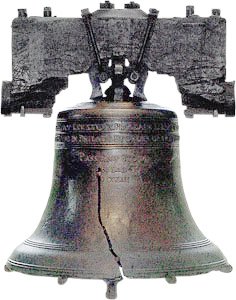
Liberty BellOne of the United States’ most important cities in its early history was Philadelphia, Pennsylvania, located in the northeast part of the US.  Philadelphia was the site (location) of the first meetings of the Revolutionary War leaders in the late 1700s.  It was where the Declaration of Independence was signed in 1776, announcing our independence from Great Britain.  It was where our Constitutional Convention took place, and was our nation’s first capital.  There’s a great deal (a lot) of history in Philadelphia, and today it continues to be a popular place for tourists visiting the United States.



Like many popular tourist locations, Philadelphia also has many private tour companies that will take you around to all of the important areas and explain the history behind the city and its historic buildings.  And like all tour companies with talkative (talking a lot) tour guides (people who lead or are in charge of the tours), sometimes not everything they say is 100% accurate.  In fact, sometimes they make things up (invent things, say things that are not true), which can be very confusing for a tourist who does not know the real story.

The Wall Street Journal recently reported that some of the tour guides in Philadelphia were telling tourists that one of the early, popular leaders of our country, Benjamin Franklin, had fathered more than 80 illegitimate children!  (An illegitimate child is one who is born to a woman not married, although this term is not used very much today, especially since there is such a high percentage of American children born to unmarried mothers.)  Ben Franklin had the reputation for being, well, a “lady’s man” (a man who is popular with women and tries to have many romantic relationships with them), but there is no evidence he had 80 children.   Another guide said that George Washington, our first president, once had lunch in Philadelphia with Abraham Lincoln, our 16th president, which would have been rather (very) difficult, since Washington died 10 years before Lincoln was born.

Because of these distortions (half-truths, false ideas) by some tour guides, the city of Philadelphia decided to institute (begin, start) a mandatory (required, obligatory) history test that all the registered guides had to take and pass to get permission to be a tour guide.  This seems at first like a reasonable idea, but the tour guides disagreed.  They didn’t want to be forced to take an exam, and instead sued (took legal action against) the city to stop the test.  Their reason?  One of the freedoms that Americans are supposed to have is freedom of speech, the freedom to say what you want, whenever you want (with some restrictions, however).  Having to take an exam limited the freedom of speech of the tour guides, they said.  The city of Philadelphia responded by saying that no, they were not required to actually tell people the facts included on the test; they only had to pass the test.  After that, they could say whatever they wanted!

While I understand what the city of Philadelphia was trying to do here, it does seem like a rather difficult task to come up with (create) an “official” history that all guides must follow.  Part of the problem is that historians do not all agree on what the “true” history is of a place.  And I agree with the tour guides that the government cannot be in the business of regulating what someone can say in public, even if it isn’t true.  And if the guides are not required to actually use the information they learn from the test, why bother (why go to the trouble of) giving them a test at all?

But what about the poor tourist, who will get possibly false information?  I think that most tourists know enough not to believe everything they hear from a private tour guide.  I have been on many tours and I always keep in mind (try to remember) that at least some of the things they tell me are probably not true.  I myself was in Philadelphia back in 1976 for the bicentennial (200th anniversary) of the Declaration of Independence (I was a boy of 13 at the time), and while I remember visiting the famous historical sites, I also remember reading my own tour books to get the details on the places I was visiting.  Most Americans study about the Revolutionary War, so (I hope) they at least will know what is true and what is not.  For international tourists, it may be a good idea wherever you travel to read a little on your own rather than relying on your tour guide.

Here’s an interesting idea: Take a tour of your own city and see what the tour guides tell visitors about where you live.  You may be surprised by some of the things they tell you!

~Jeff

Posted in Life in the United States | 17 Comments

Doing a Polite Tap Dance

circle_question_mark.png

QUESTION:
Nikolay in Russia wants to know what it means when someone does a polite “tap dance”.

ANSWER:
A tap dance is a type of dance where the dancers wear special shoes with metal parts on the bottom.  Each step the dancer takes makes a sound, and very good tap dancers can make very fast and complicated sounds as they dance.

When we say that someone is doing a tap dance or tap dancing (usually “around (something)”), we mean that this person is trying not to answer a question or talk about a topic.  This person may say many other things, though, that will distract (take attention away) from the topic or question.

For example, if your girlfriend asks you if you’d like to visit her parents for two weeks and you don’t want to, you may have a conversation like this:

Your girlfriend:  I think it would be great to spend two weeks this summer with my parents.  What do you think?
You:  Your parents are very nice.  It must be great for them to have your sister and brother living nearby.
Your girlfriend:  Yes, it is, and they spend a lot of time together.  What do you think about a visit?
You: The last time we visited, they were going to take a vacation.  Did they go?
Your girlfriend:  No not yet.  I think they’ll go in May.
You:  Oh, look at the time!  We’d better leave now or we’ll be late for the movie…

You have just done a very good tap dance around your girlfriend’s question.  You can also tap dance around a sensitive issue that you don’t want to mention directly, but you hint at (say indirectly) by the things you say.  For example:
– “She tap danced around the scandal and instead talked about the president’s new ideas.”

I hope this is helpful.  For those who would like to see an actual tap dance, here is legendary (very famous) tap dancer Sammy Davis Jr., along with some other amazing dancers.

~ Lucy

Posted in Language & Terms | 16 Comments

Please Don’t Overshare

Ted Landphair of Voice of America had an interesting story recently about a contest that is held (takes place) each year by the publishers of Webster’s New World Dictionary to pick a new word or term that became popular in the past year to put into their dictionary.  This “word of the year” is voted on by the public selecting from among five choices.

Here were the choices for 2008, with the definitions:

  • Overshare – telling people more than you intended to or wanted to, especially online (such as Facebook, Twitter, and other similar sites).
  • Leisure sickness – the idea that some people feel better while they’re working and worse when they are on vacation (leisure means not working).
  • Cyberchondriac – this is a variation on the word hypochondriac, who is someone who imagines that they are sick all the time.  A cyberchondriac is someone who reads about some illness on the Internet and then thinks that they have it, too.
  • Selective ignorance – this is when you ignore on purpose (intentionally, deliberately) certain information, such as your emails.
  • Youthanasia – this is a variation of euthanasia, which is when someone is killed because they are very sick.  Youthanasia is when you try to stay young longer than you should by getting plastic surgery on your face, skin, etc. to make you look younger.

So who won the contest?  Overshare.  I will try not to overshare in 2009.

~Jeff

Posted in Language & Terms | 20 Comments

A Paperboy Looks Back on a Disappearing Job

Today I want to look back (think or talk about something from my past, my personal history).   Back in the mid-1970s, at the age of 11 or 12, I worked as a paperboy for the evening newspaper in St. Paul, the St. Paul Dispatch.   A paperboy (or papergirl, although they were mostly young boys) is a child who sells newspapers on the street or (more commonly in the U.S.) delivers the newspaper to people’s houses.  It was very common for newspapers back in my youth (younger days) to have paperboys all throughout the city delivering newspapers.  The newspapers would be dropped off (left, transported to) on a street corner early in the morning (5:00 AM) and during the mid-afternoon (4:00 PM), and the paperboy had to walk to the corner, pick up his 40 or 50 newspapers, put them in a small bag, and walk from house to house delivering the newspapers.

Before we delivered them, we usually folded them so we could easily toss (throw) them at the houses as we walked by or rode by on a bicycle.  Nearly every house subscribed to a daily newspaper in my neighborhood, so there was always lots of work.  I had lots of friends who also had these paper routes (paper delivery jobs) when they were in elementary school in order to earn a little extra money for candy and soda and whatever kids spend money on. Being a paperboy was part of growing up for many young boys during the mid-20th century in large American cities.  (Newspapers in the 1990s began moving away from having young children work as paperboys, and now most newspapers are delivered by car.)

In the Twin Cities where I grew up (Minneapolis and St. Paul, Minnesota), each city had two daily newspapers – one in the morning, and one in the afternoon. Before the age of cable and satellite television, and long before the Internet, the only way you could get your news was watching one of the three local television stations or reading a newspaper.  My parents received the daily paper, and I would always begin my day reading the paper as I ate breakfast (cold cereal, usually).  I remember watching my father read the paper every morning and every evening.  Like most children growing up, I wanted to act like the adults in my world, so I, too, read the newspaper every day.  In fact, when I got my paper route, I spent part of the money I earned (made) on a subscription to the Minneapolis Star.

Then, sometime in the 1980s, when cable television became more and more popular, people started reading the newspapers less, so many morning and evening papers combined into one, single morning paper.  The St. Paul Dispatch became the St. Paul Pioneer Press-Dispatch; the Minneapolis Star became the Minneapolis Star-Tribune, and so forth.   All across America, newspapers were closing or combining.

Then came the Internet.  Now, everyone could get almost all the news they wanted online – for free!  So the number of subscribers to the newspapers began to decline even more.  Combined with the current economic recession, many newspapers simply cannot survive.  Several newspapers have closed in the past few months, some of them 150 or more years old.  Some are moving to the Internet, such as this Seattle paper.

Many people welcome this change.  They like getting their news whenever they want and the freedom to read any newspaper in the world that is online.  But of course, newspapers need money to pay reporters who report the news.  With few subscribers and Internet advertising that does not pay them enough, some newspapers – many newspapers? – will simply disappear in the next few years because they don’t have the money to continue.  This is especially true of smaller, local papers.

Although I do read news stories online, I still prefer to read an actual, physical paper.   Every morning, just as I did when I was 11 years old, I get up and collect (pick up) my morning newspapers from my front steps, and sit down with a bowl of cold cereal to read the newspapers.  I love the physical paper in my hands, and I will miss it when it’s gone.

~Jeff

Posted in Life in the United States | 23 Comments

To Dole Out and To Be on the Dole

circle_question_mark.png

QUESTION:
Jorge from Peru wants to know what this sentence means: “Germany and Spain doled out incentives to consumers.”

ANSWER:
To dole out means to give something–money, food, clothes, or something else–to other people who need it, and usually to do so little by little.  “To dole out” implies the idea that the person who is “doling out” is more prosperous (has more money or things) than the person that the gift is going to. This is why “to dole out” is often used when speaking of the government, businesses, or charity organizations.

Here are a couple of examples using “to dole out”:
– “After the bad storms, the city government doled out fresh water and food to people left without power in their homes.”
– “The company doled out small cash bonuses to its employees at the end of the year.”

In the sentence Jorge mentioned, incentives are things that encourage or motivates people to do something, and a consumer is someone who buys things for their own use.  The sentence, then, means that Germany and Spain are passing out or making available little by little things that will get people to buy goods, probably to improve the current bad economy.

A related expression, “to be on the dole,” is used to describe someone who is getting regular help in the form of money from someone: the government, one’s parents, or another source.  In the U.S., this expression usually has a negative meaning.  If we say that someone is “on the dole,” we usually mean that he or she is getting money without doing any work, and he or she should feel some shame in getting this help.

Of course, in these difficult times, there are many people getting financial help from the government, whether it’s unemployment benefits for people who lose their jobs or welfare assistance for the poor to pay for their daily needs, such as food and clothes.  The more neutral (neither bad nor good, positive nor negative) way to describe this situation is to say that people are on public assistance or they are getting government assistance.

Thanks, Jorge, for the very timely question, and I hope this is useful.

~ Lucy

P.S.  To our own Irish American, Dr. McQuillan, and to all of us in the U.S. celebrating this day: Happy St. Patrick’s Day!

Posted in Language & Terms | 12 Comments

Bestsellers – March, 2009

ReadingI thought it would be fun to take a look at some of the bestselling books in the United States now to give you an idea of what Americans are reading.  The New York Times has a bestseller (most books sold) list for both fiction (novels, stories) and nonfiction books.  Here are some of the current most popular books in nonfiction (books about things that are real, that actually happened):
*The Yankee Years by Joe Torre and Tom Verducci.  This is a memoir, a book that talks about one’s own life history and the things that happened to you.  Joe Torre was the coach (leader) of the New York Yankees baseball team for many years, and this book is about his experiences there.  (Torre is now coach for the Los Angeles Dodgers, my favorite baseball team.)  Like a lot of books “written” by famous people, Torre has a ghostwriter (someone who knows how to write who helps another person “write” his or her book).  Torre is a very well-known baseball coach, and people are always interested in sports and sport celebrities (famous people).

*Outliers by Malcolm Gladwell.  Gladwell is a popular writer for the magazine, The New Yorker, who became famous a few years ago for a book called The Tipping Point.  In Outliers, Gladwell discusses why some people are successful in life and others are not, focusing on things like luck as well as skill.  I read this book last year and really enjoyed it.  I’ve read all three of Gladwell’s books and never miss his articles in The New Yorker.  He’s a great writer – clear, logical, and interesting to read.

*A Slobbering Love Affair by Bernard Goldberg.  Goldberg is a former reporter who is now a political commentator (see ESL Podcast 459 for more about commentators).  To slobber means to give someone big, wet kisses.  The adjective slobbering here really describes the act of saying nice things about another person, but too much, excessively, almost to the point of being embarrassing.   A love affair is a situation where you are in love with another person.  Goldberg is a political conservative who in this book is criticizing the U.S. news media (newspapers, magazines, television) for being “too nice” to President Obama and not being critical enough of his mistakes.  Political books are often in the top 10 bestseller lists, and this is an example of that.  Sometimes they are liberal books, sometimes they are conservative books.  In the current top 10, there are three conservative books.

*Multiple Blessings by John Gosselin, Kate Gosselin, and Beth Carson.   This is another ghostwritten book (Beth Carson is the ghostwriter).  It is about a married couple (John and Kate Gosselin) who have eight children.  (No, this is not the same as the woman who had octuplets that Lucy described a few weeks ago.)  This couple had two children and then had sextuplets – six babies.  There is a popular television show about this family and the difficulties they have in raising so many children called “Jon and Kate Plus Eight.”  A blessing is a good thing that happens to you, so multiple blessings would be many good things that happen to you.

~Jeff

Posted in Life in the United States, News and Current Events | 13 Comments

Poll: The Worst Reality Shows

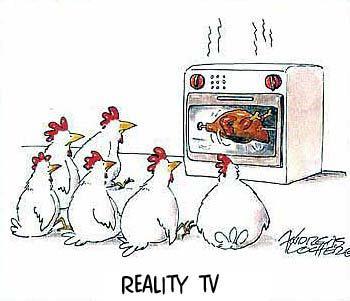
realitytv1.jpgReality shows (shows about real people or real events) have become very popular in the U.S. and worldwide. There are competition shows, shows that follow celebrities around in their daily life, and many others.

Even for those of us who watch reality shows, it seems that TV producers (makers of programs) are getting more and more desperate (wanting something very, very much and willing to do anything for it) and outrageous (shockingly bad) with show ideas.  Then again, maybe I’m just old-fashioned and these shows aren’t over the top (gone too far).

Here are a few reality shows that are considered to be among the very worst ever on American television. Which do you think is the worst?  Are there others–past or present–that you think are worse than these?

~ Lucy

……..

1. Who’s Your Daddy?

A young woman who gave up a child for adoption (for someone else to legally raise as their own child) tries to pick the long-lost (has not seen for a long time) biological (by blood) father of that child. She has to pick from a group that includes several impostors (a person who pretends to be something he/she is not). If she guesses correctly, she wins $100,000.
……..

2. The Will

A very wealthy rancher (person who owns a large farm) and land developer (builder) puts his large ranch estate (house, land, and valuables) up for grabs (as a prize). His friends and members of his family competed.  The winner was put in the man’s will (a document that tells others what you want to do with your belongings after you die) and will get the estate when he dies.
……..

3. Temptation Island

Four unmarried couples travel to an island. They are given many temptations (desire to do something wrong) to lure them (try to get someone to do something) from their relationships. Each person spends time alone with members of the other couples in tempting situations, such as being in a hot tub (a small pool with hot water and bubbles) or in a bedroom together.
……..

4. Armed and Famous

Armed and Famous puts famous celebrities on the streets as cops (police officers) in a small town in Indiana, in the Midwestern part of the U.S. The celebrities are trained to be police officers. They then go along with their training officers to patrol (watch over) the streets.  You see how the celebrities handle their training and how they operate as police officers.
……..

[Poll=6]

Posted in Television and Movies | 22 Comments

1500 = Fifteen Hundred or One Thousand Five Hundred?

circle_question_mark.png

QUESTION:
Mitch in Italy wants to know how to express quantities (amounts; numbers) by using “hundreds” and what is the largest quantity that can be expressed in this way.

ANSWER:
When you see the number 2,300, you may say to yourself, “That’s two thousand three hundred.”  You would be right, but Americans have another way to say this number:  “twenty-three hundred.”

For numbers 1,100 to 9,900, you can express them as hundreds, rather than thousands.  Here are some examples:

– 4,300 = forty-three hundred
– $1,500 = fifteen hundred dollars
– the year 1900 = the year nineteen hundred

We use this convention (way of doing things) with “round” numbers:  4,300 and not 4,321.  For “4,321” we usually express this in thousands:  “four thousand three hundred (and) twenty-one.”

For years, we do things a little differently:  We group the first two and the last two digits (numbers 0-9) together, like this:
– 1986 = nineteen eighty-six
– 1086 = ten eighty-six
– 2086 = twenty eighty-six
For years with fewer than four digits, we group just the last two digits:
– 873= eight seventy-three
However, for our current year, we express it this way:
– 2009 = two thousand (and) nine OR twenty oh-nine

Why do Americans express thousands as hundreds?  “Fifteen hundred” (1,500) is easier and faster to say than “one thousand five hundred.”  While using this convention is very common and often sounds a little less formal in daily conversation, it is fine to express these numbers–with the exception of years–as hundreds or thousands.  Both are correct and both are commonly used.

~ Lucy

Posted in Language & Terms | 20 Comments

Did I mention I’m reading Shakespeare to my friend, Nelson Mandela?

MandelaI saw a report recently on the BBC about a survey of 1,500 adults and teenagers on their reading habits, and it had a very interesting finding (result): Almost half of all the men and about one-third of the women said they had lied at one time or another (at some time in the past) about the books they were reading in order to impress friends or potential romantic interests.

Among the men, it was most likely that they were trying to seem more intellectual or romantic, according to the survey.

Just in case you’re interested, the men said that they would be most impressed by a woman who reads news websites, Shakespeare, and song lyrics.

The women said they would be most impressed by a man who was reading Shakespeare or Nelson Mandela’s biography.

Finally, the survey found that both men and women would instantly fall in love with anyone who said they listened regularly to ESL Podcast.  So now you know what to say the next time you meet a beautiful man or woman of your dreams.

~Jeff

Posted in News and Current Events | 28 Comments