I’m sure that we could all use (would all benefit from) a little joke. A standard (common) form of a joke begins with the question, “What’s the difference between…” Here’s a joke I found on the Internet that uses this formula:
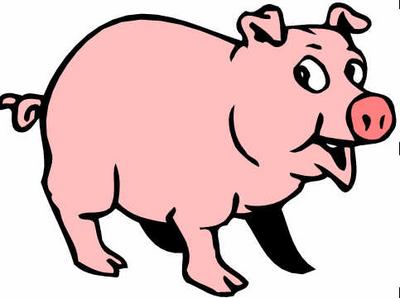
What’s the difference between men and pigs?
Pigs don’t turn into (become) pigs after they drink too much.
The key to this joke is that the word “pig” is both an animal and a term we use for a man who behaves very badly or crudely, especially toward women. If a man drinks too much, he can sometimes begin to act badly, especially toward women.
Here’s another one:
What’s the difference between one yard and two yards?
A fence.
Yard can refer to the area outside of your house, usually with grass. Yard is also a unit of measurement equal to 36 inches (or 91.44 centimeters for the rest of the world). When you first read the question, you think that the person is asking about the unit of measurement, but the answer is about the area around your house. A fence separates the yards of neighbors, and so creates two separate yards.
Are jokes funny if they have to be explained? I don’t know. You tell me!
As many of you know, California has many immigrants who speak English as a second language. The State of California has developed a special website to help adults learn English online. It is full of short, interesting news stories with additional materials to help you improve your English. These stories are good for both intermediate and advanced students. The site is called the California Distance Learning Project (CDLP).
How to use this site: Warren Ediger, one of the best ESL classroom teachers and online tutors I know, has detailed suggestions on how you can use this site to help improve your English. Warren gives you specific steps on how to make the best use of the articles and stories you will find on the CDLP website.
It’s Monday, the start of a new week, and for those of us who work Monday to Friday, the most dreaded (disliked before it happens) day of the week.
We used to say that the average work week for Americans if 40 hours. These days, Americans are actually working more, with about 40% working 50 hours or more. That’s more work and more pressure. Pressure is the force we feel to do something. Bosses may pressure workers to do more work. Workers are under pressure to do well to keep their jobs.
This song is called “Under Pressure” and is by the classic rock group Queen. You may recognize the first seven notes (musical sounds). They have been sampled (music used from other songs) in other, more recent songs. The video is interesting to watch, too. I sometimes feel like screaming (yelling loudly with a high voice), just like the women in the video. Don’t stand too close to me.
~ Lucy
“Under Pressure”
by Queen
Mm ba ba de
Um bum ba de
Um bu bu bum da de (just sounds with no meaning)
Pressure pushing down on me
Pressing down on you, no man ask for
Under pressure – that burns a building down Splits (divides) a family in two Puts people on streets (makes people homeless)
Um ba ba be
Um ba ba be
De day da
Ee day da
It’s the terror (being very scared) of knowing what the world is about
Watching some good friends screaming, ‘Let me out’ Pray (communicating with a god) tomorrow – gets me higher
Pressure on people – people on streets
Day day de mm hm
Da da da ba ba
O.K.
Chippin’ around (going around (not used in American English)) – kick my brains (the organ in your head that allows you to think) around the floor
These are the days it never rains but it pours (rains very hard)
Ee do ba be
Ee da ba ba ba
Um bo bo
Be lap
People on streets – ee da de da de
People on streets – ee da de da de da de da
It’s the terror of knowing what this world is about
Watching some good friends screaming, ‘Let me out’
Pray tomorrow – gets me higher high high
Pressure on people – people on streets
Turned away from it all like a blind (unable to see) man Sat on a fence (not supporting one side or another; being neutral) but it don’t work
Keep coming up with love but it’s so slashed (cut into pieces with a knife) and torn
Why – why – why ?
Love love love love love Insanity (craziness; mental illness) laughs under pressure – we’re cracking (breaking into small pieces; becoming emotionally unstable)
Can’t we give ourselves one more chance
Why can’t we give love that one more chance
Why can’t we give love give love give love give love
give love give love give love give love give love
‘Cause (because) love’s such an old-fashioned (traditional; not modern) word
And love dares you (asks that you have courage) to care for the people on the edge of the night
And love dares you to change our way of caring about ourselves
This is our last dance
This is our last dance
This is ourselves
Under pressure
Under pressure
Pressure
If you are an artist in the U.S., your artwork (piece of art) may be protected under the Visual Artists Rights Act, which became law in 1990. If you live in California, your artwork may also be protected by the California Art Preservation Act (1979). Both of these laws prohibit (make something unlawful, not legal) the alteration (changing) or destruction (destroying) of certain types of public artwork without first notifying (telling) the artist so that the artist can remove the artwork if he or she wants to.
In Los Angeles yesterday, an artist by the name of Kent Twitchell received a $1.1 million settlement (decision or compromise between the two sides in a lawsuit) in his lawsuit against the U.S. government and 11 other people who managed the building. He filed the lawsuit because his six-story (floor) mural (painting on a wall) on the side of a government building in downtown Los Angeles was painted over, so that a new layer of paint covered the mural. The mural was painted between 1978 and 1987 and is of another artist. It was painted over in 2006.
For the artist, the good news is that art experts say that it is still possible to restore (bring back) the mural. It’s not clear, though, if that will happen.
Many of you know that Voice of America has a “Special English” program that helps you improve your English by using a more limited vocabulary and slowing down the rate of speech (how fast someone talks). It is similar to ESL Podcast, except that there are no explanations or “fast” versions at the end.
Voice of America Special English now has a 30 minute television show which gives you four to five news stories each week in video format. The nice thing about these videos is that they are captioned, meaning you can see the words in English on the screen. VOA makes it easy for you to get these automatically by making them part of a weekly podcast.
If you have iTunes and want to subscribe to the podcast, do this:
(a) Open your iTunes and go the the Advanced menu on the top
(b) Click on the ‘Subscribe to Podcast’ menu item
(c) Copy and paste this web address into the box:
http://www.voanews.com/specialenglish/customcf/videocastxml.cfm?id=1316
(d) Click Okay.
The latest podcast will begin to download in iTunes. When it’s finished downloading, just click on the episode and enjoy!
This song by Green Day is, I think, about saying good-bye. The title, Good Riddance, is something we say when we are glad that something or someone is no longer here. I think the title is facetious (joking; being funny). He is not really glad that the person he is saying good-bye to is gone.
This song is dedicated to P.D.M. It is not “good riddance” but a loving farewell to one of the best men who ever lived.
~ Lucy
“Good Riddance (Time of Your Life)”
by Green Day
Another turning point (time to make a major life change), a fork stuck in the road (a place or time where/when more than one option or way is possible)
Time grabs you by the wrist, directs you where to go
So make the best of (accept a bad situation and make it as good as possible) this test, and don’t ask why
It’s not a question, but a lesson learned in time
It’s something unpredictable (not able to know the future), but in the end it’s right.
I hope you had the time of your life (a great experience; the most enjoyable, interesting, and exciting experience of your life).
So take the photographs, and stillframes (each individual picture in a film) in your mind
Hang it on a shelf in good health and good time Tattoos (permanent pictures on your body made with ink) of memories and dead skin on trial (being judged) For what it’s worth (even though it may not be important) it was worth all the while
It’s something unpredictable, but in the end it’s right.
I hope you had the time of your life.
It’s something unpredictable, but in the end it’s right.
I hope you had the time of your life.
It’s something unpredictable, but in the end it’s right.
I hope you had the time of your life.
Instead of forwarding this to all of you via (by) email, here is your quotation of the day:
“What is a committee? A group of the unwilling, picked from the unfit, to do the unnecessary.”
— (Richard Harkness, New York Herald Tribune, June 16, 1960)
unwilling = not eager to do something; don’t want to do something unfit = not qualified; does not have the skills or ability to do something unnecessary = not needed
If you’re like me, you have friends, family, and co-workers who forward (send to other people messages that were sent to them) email jokes, chain letters, and other messages that you probably don’t want. Chain letters are letters that tell you to forward that message to other people or something bad will happen. I never forward chain letters so I’m expecting to be killed or maimed (permanently injured), or have many years of bad luck.
For me, it’s difficult to email that person to tell them to take me off his or her list. I don’t want to hurt their feelings (make them feel badly) or to make them think that I don’t appreciate them thinking of me (having me in their mind). The flip side (the other side of the issue; on the other hand) is that I have far too many email messages in my inbox when I check for new messages.
Some people suggest writing an email to the person who has you on their distribution list (list of people who receive a message or something else) to ask them to remove you. This is one example:
. . .
Cate,
Thank you for thinking of me with the jokes and quotationsof the day (words said in the past by someone else that are funny, interesting, or inspirational). I’ve appreciated you sending them to me. Right now, though, I am trying to get a handle on (to manage; to keep in good order even though it is difficult) my email, and I am asking people to remove me from their distribution lists for the time being (for a short time).
Would you please remove me from your distribution list?
Thank you very much.
. . .
This note is polite enough and I might send something like this to someone, but I haven’t done it yet. Right now, my strategy (plan) is to continue deleting (erasing; putting in the trash) those messages from my inbox.
What do you do with unwanted email from people you know, people you don’t want to offend (upset)? Would you write someone directly to ask them to remove you from their distribution list?
Puns are jokes that use different meanings of the same or similar sounding words. English spelling allows different words with the same sound to be spelled differently, so there is more opportunity in English for puns. Puns are very difficult to understand unless you know both meanings of the words. Although there is an expression in English, “If you have to explain the joke, it is no longer funny,” I will try anyway.
When a clock is hungry it goes back four seconds.
The pun here is on the words seconds and four/for. Seconds has two meanings: a measure of time (60 seconds in 1 minute), and a second helping or serving of food. For example, if you are eating at home and your spouse asks you if you want “seconds,” s/he means “Do you want another serving of the food you just ate?” Four is a number (4), and for is a preposition. To go back for seconds means to go get more food. To go back four seconds means the clock reverses in time four seconds. So this is a “double pun,” in that we are “punning” on the words seconds and four.
Don’t worry if you don’t think the joke is funny. I liked it, but I really like puns!
Last October, Lucy posted a note about the concept of a “Googleganger,” who is a person who has your name and whom you discover while searching on Google. For example, I would search for “Jeff McQuillan” and find other people with that same name around the world.
The New York Times has an article this morning on this idea of finding people with your name, and actually contacting them to meet! The article is entitled “Names that Match Forge a Bond on the Internet.” To forge a bond means to make a connection, to get to know someone better.
So if you haven’t looked for your Googleganger yet, then read this article and you may decide to make friends with your namesakes (people who have the same name as you).
 I’m sure that we could all use (would all benefit from) a little joke. A standard (common) form of a joke begins with the question, “What’s the difference between…” Here’s a joke I found on the Internet that uses this formula: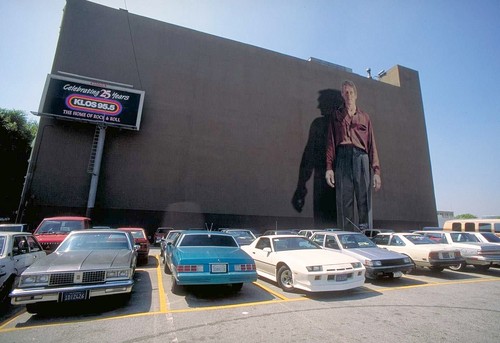
 Many of you know that

 Last October, Lucy