The Movie or the Book

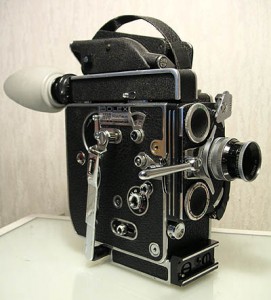
bolexh16Talking about Twilight, the book and the movie, in Tuesday’s blog comments got me thinking about books that have been made into movies.  These types of screen adaptations (television or film versions) are so common today, ranging from classics (old, respected books) to modern bestsellers (books that are extremely popular).

Personally, I have a very hard time seeing a screen adaptation after I’ve read a book.  In fact, I usually avoid it.  There are two main reasons.  First, the film version has no choice but to leave out parts of the book because of time constraints (not having enough time) and this, to me, changes the nature or scope (range) of the story.  Second, seeing a screen adaptation results in me replacing the images (pictures) I’ve formed in my mind about the book with those on the screen.  This is especially troublesome (a problem) when the ways I picture the main characters don’t match those in the film, and the film images replace those I’ve created in my own mind.  I can’t resist it.  It happens every time, and for me, that’s a sad thing.

This happened with one of my favorite novels, I Claudius, by Robert Graves.  This is a historical novel (story about real people in history) about the first Roman emperors (rulers).  In the 1970s, the BBC produced a miniseries (show with several parts) based on this novel, which many people had told me was excellent.  I finally rented the miniseries, but I couldn’t get the through the first episode.  The main character, played by an outstanding British actor, was completely different from how I had imagined him to be, and I couldn’t get past that (forget about it and move on).  Now, when I re-read the book, I can only see that actor, not the character I had created in my mind as I read the book the first time.  Another of my favorite books, Lonesome Dove by Larry McMurty, another historical novel, this time about the American west, has also been made into a miniseries.  Although this, too, received excellent reviews, I can’t bring myself (convince myself; force myself) to see it. I know that this is my loss, and I’m missing out on some very good films.

Are you like me?  Do you also have this problem?  Or, can you separate the book and the film, and not be influenced by the other?

~ Lucy

Posted in Television and Movies | 31 Comments

Americans’ Top 15 Dream Vacation Destinations

800px-waikiki_beach_at_sunset.jpgThis is the time of year when many Americans go on vacation. In 2008, a poll was conducted asking 2,500 American adults the following question:


“If you could spend a vacation in any country in the world, outside the United States, and you would not have to worry about the cost, what one country would you choose?”

Here are the top 15 destinations (places to go):

1. Italy
2. Australia
3. Great Britain (England, Scotland, and Wales)
4. France
5. Ireland
6. Greece
7. Japan
8. Germany
9. Canada
10. Spain
11. New Zealand
12. Switzerland
13. Mexico
14. Bahamas
15. Jamaica

(*Harris Poll conducted June 9 and 16, 2008)

I have been to only five of these destinations, but I’d like to visit them all, plus many more not on this list.

How about you?  Which country, on or off this list, have you never been to, but would like to visit?

~ Lucy

Posted in Life in the United States | 48 Comments

The Seven Plots of All Literature (Plus Two)

I was recently reading a fascinating book called The Art Instinct by Denis Dutton.  The books tries to show that much of our sense of art and artistic judgment is influenced by our genetics – that is, something that we are born with –  and that this instinct has evolved (slowly changed) over many, many years.  I’m not sure if I agree entirely with this argument, but it is an interesting idea.

In one section of the book, Dutton talks about research done by another writer, Christopher Booker, on the kinds of plots (story structures) that are found in the spoken and written stories of almost every language around the world.  Booker identifies seven “basic plots” that every story uses in one way or another.  Again, I’m not sure if this is true, but you may be interested in them.  Many stories may combine different kinds of plots as well:

  • Overcoming the MonsterTo overcome means to defeat, to win over.  A monster is a bad creature (person or animal).  This is a story about defeating an evil person or thing.
  • Rags to RichesRags are dirty pieces of clothing; riches refers to lots of money.  This is a common expression in English, to go from “rags to riches,” especially to describe someone who works hard and becomes successful after being poor.  This is a story about someone going from being very poor to being very rich.
  • Quest – A quest is when you search for something for a long time, usually something very important or very valuable.  Typically a quest story has a hero with others that help him in his search, and he must overcome some danger or evil in order to get his prize.  The hero gets the prize and a beautiful woman, and they often become King and Queen.
  • Voyage and Return – A voyage is a long trip. In this kind of story, the protagonist (main character) leaves “normal experience” and goes into an alien or strange world, then returns after escaping some danger in the new world.  (The famous English children’s story Alice’s Adventures in Wonderland is an example of this.)
  • Comedy – A rather broad (large) category, this kind of story often has some confusion until the end of the story, when the hero and his lover are united.
  • Tragedy – A tragedy is a very sad event or situation.  Tragic stories are usually about how someone overreaches (tries to do too much or more than he or she should) and this leads to terrible consequences (results).
  • Rebirth – A rebirth is when someone is reborn – born again.  This kind of story has the protagonist going through some dramatic change during the story, so that by the end of it he or she is essentially a new character.

Booker later added two more plot types:

  • Rebellion – A rebellion is when people try to overthrow (defeat, bring down) their government.  George Orwell’s 1984 would be an example of this kind of story.
  • Mystery – A mystery involves some crime or unusual event that the protagonist tries to figure out or solve.  The protagonist is usually called a detective, and may be a police officer (but not always).

So there you have all the possible plots in the world – at least, according to Mr. Booker!

~Jeff

Posted in Television and Movies | 15 Comments

The Best One-Liners of All Time

I’m not sure these are, in fact, the best one-liners (short jokes or funny/clever remarks), but I thought these were pretty good when I saw them recently in a magazine.

~ Lucy

…..

“If you can’t say something good about someone, come, sit right here by me.”
Alice Roosevelt Longworth
(She was the oldest child of President Theodore Roosevelt.  This is a takeoff (different version) of the popular saying, “If you can’t say something good about someone, don’t say anything at all.”)

“Well-behaved women seldom make history.”
Laurel Thatcher Ulrich
(She is a historian at Harvard University.)449px-dolly_parton_in_nashville_cropped

“The reward for conformity (doing what is expected of us socially) is that everyone likes you except yourself.”
Rita Mae Brown
(She is an American novelist.)

“It costs a lot of money to look this cheap.”
– Dolly Parton on her signature (unique; distinctive) look
(She is a very well known country singer, most popular in the 1970s and 1980s.)

And, finally:

“A facility (ability to do something easily and well) for quotation covers the absence (being without) of original thought.
Lord Peter Wimsey
(He is a character in Dorothy Sayers’ classic mystery novels from 1930s and 1940s.)

Posted in Jokes and Humor | 17 Comments

Eat up!

GourmetWhen someone says to a child, “Eat up!” they mean “Hurry up and eat!”  This may happen if the child is taking a long time to eat or is playing instead of eating the way he or she should.  I heard my own parents say this to me many times when I was a child, and it is quite common in most American families to say this, especially if the family is getting ready to leave and a child is still eating.

ESL Podcast #477 is about making a gourmet or high-quality meal, usually for a formal occasion.  Certainly if you are enjoying good food, you don’t want to “hurry up.”  But the truth is that Americans seem to eat more rapidly than people in most other countries.  A recent article in the New York Times provided the average amount of time people spend eating each day (all meals combined) for several different countries, and the results are very interesting: Americans, Canadians, and Mexicans spend the least amount of time eating among the countries surveyed – less than 75 minutes on average each day.  The French, Japanese, Italians, and Spanish spend the most time eating.  Here are some of the countries, from most time spent eating to least time spent (times are approximate):

  • France –  135 minutes
  • Japan – 118 minutes
  • Italy – 115 minutes
  • Spain – 103 minutes
  • Germany – 101 minutes
  • Great Britain – 82 minutes
  • Norway – 80 minutes
  • United States – 75 minutes
  • Canada – 70 minutes
  • Mexico – 65 minutes

Why are there such differences?  No doubt there are cultural explanations for why Americans eat so quickly.  I suppose the “slow eating” countries would say that they have better food, which may be true.  I know whenever I cook a meal, I eat it as quickly as possible, because it always tastes terrible!

~Jeff

Posted in Life in the United States | 18 Comments

Capitalizing Words in Titles

circle_question_mark.png

QUESTION:
Benjamin in France wants to know what the rules are for capitalizing words in titles.

ANSWER:
This is not an easy question to answer because the major style guides (written rules for using a language) disagree.

First, it may be helpful to distinguish between capitalizing words and putting words in caps.  To capitalize a word is to make the first letter of a word a capital letter, for example:  “Los Angeles,” “Kathy Griffin,” and “Alice’s Restaurant.”  To put a word in caps is for all letters of the word to be written in capital letters, for example:  “LOS ANGELES.”

You may have noticed, as Benjamin has, that titles in English don’t always capitalize every word.  Titles of anything–books, films, songs, plays, television shows, and many other things–always capitalize the first word.  After that, the rules get more murky (unclear) and it’s the little words that style guides disagree on.

According to one popular style manual, the Publication Manual of the American Psychological Association, this is the rule:
“Capitalize the first and last words of the title and all nouns, pronouns, adjectives, verbs, adverbs, and subordinating conjunctions (if, because, as, that, etc.).”
=> This would mean capitalizing most of the words.

According to another popular style manual, The Chicago Manual of Style:
“…articles (a, an, the), conjunctions (and, but, or, for, nor), and prepositions, regardless of length, are lowercased (not capitalized) unless they are the first or last word of the title.”
=> This would mean that many of the little, less important words would not be capitalized.

A third source, The Associated Press Stylebook, has these rules:

  • Capitalize the principal (most important) words, including prepositions and conjunctions of four or more letters.
  • Capitalize an article–the, a, an–or words of fewer than four letters if it is the first or last word in a title.

=> This would mean that the length of the word determines whether little words are capitalized or not.

Do you have a headache?  I do, too.  The general advice is to pick one set of rules–one style manual–and stick with (follow) it. I know that this isn’t a very satisfying and definitive (authoritative; certain) answer, but if it makes you feel any better, this is a question that many native speakers struggle with, too.

~ Lucy

Posted in Language & Terms | 5 Comments

Doodling

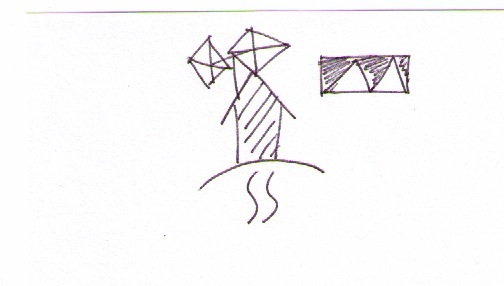
DoodleTo doodle is to draw shapes and lines on a piece of paper for no particular purpose.  Students in class will often doodle on their notebooks and papers while the teacher is talking, perhaps because they are bored or uninterested.   I didn’t often doodle in school, but I have been doodling while talking to someone on the phone for many, many years.


Interestingly, my doodles are almost always exactly the same.  I draw a house, then the ground beneath the house, then a sidewalk leading up to the house.  Sometimes I’ll also draw a tree next to the house.  These images – house, tree, sidewalk – are actually very common drawings that children make, which is probably when I first started doing them.  (It could also be possible that I have the mind of a child, which many have told me!)

I doodle two other things when talking on the phone or listening to a voice mail message.  First, I always add a radio antenna on top of the house.  This is probably because, since the age of 11, I have been an amateur radio operator.  (Amateur radio – sometimes called ham radio – is a service that allows you to talk to other people in different states and countries by using radio waves.)  The second thing I doodle (sometimes even without the house) is a series of triangles that form a small box or rectangle.  I have no idea why I do that.

Are these doodles a distraction – that is, do they make you listen less carefully?  It appears that they don’t.  In fact, doodling appears to help you remember things while you doodle!  A study in the journal Applied Cognitive Psychology found that people who were asked to doodle while listening to a voicemail message remembered more of the message than those who did not doodle.  One theory is that doodling provides just enough stimulation (activity that produces a response) to prevent people from being too distracted.

Some people even claim that their doodles help them remember things that happened many months or even years ago.  This would not work for me, however, since I am not very creative and all my doodles are the same.

-Jeff

Posted in Language & Terms, Life in the United States | 24 Comments

Hanky Panky

circle_question_mark.png

QUESTION:
Hyun in Korea wants to know what “hanky panky” means.

ANSWER:
Hanky panky is used in two major ways. First,  “hanky panky” is used to describe a secret sexual relationship that is against the rules or that is not generally acceptable, perhaps because the two people involved are married to other people, or they work in a company that does not allow its employees to be romantically involved.  If you suspect something is going on, you migh say, “I think there is some hanky panky going on between those two.”

A second way it is used is to describe improper or bad behavior, often something that is done secretly so other people, such as those in authority (with power), don’t know about it.  It’s usually something that is bad or wrong, but that is not too major or important.  For example, your mother packs (puts into one container) you a lunch with healthy foods, but you trade (give something in exchange for something else) your carrots for someone else’s candy.  One day, you return home and your mother sees a candy wrapper (paper that candy is packaged in) in your lunchbox.  She may say, “I think there’s some hanky panky going on here.”

There is also a very well known oldie (old, classic song) that mentions “hanky panky.”  I’ll let you decide which meaning the song is referring to.

~ Lucy


My Baby Does the Hanky Panky (1963)

by Tommy James and the Shondells

My baby does the hanky panky,
My baby does the hanky panky!

My baby does the hanky panky,
My baby does the hanky panky!

I saw her walking on down the line.
You know I saw her for the very first time.
A pretty little girl standing all alone.
Hey baby, can I take you home?
I never saw her, never really saw her.

My baby does the hanky panky,
My baby does the hanky panky!

I saw her walking on down the line.
You know I saw her for the very first time.
A pretty little girl standing all alone.
Hey baby, can I take you home?
I never saw her, never really saw her.

My baby does the hanky panky,
My baby does the hanky panky!

My baby does the hanky panky,
My baby does the hanky panky…

Posted in Karaoke English, Language & Terms | 9 Comments

Hiring Americans to Head Universities in Other Countries

graduation250.jpgI recently read something surprising: In the past few years, many universities in other countries have hired Americans for top-level jobs. For example, in 2009, a provost (senior administrator) at one of the top universities in the U.S.–Yale–will become the head (director; person in charge) of Oxford University, one of the most prestigious universities in England. Another American academic (university teacher or scholar) at Harvard, perhaps the most well-known American university, will become the new head of the University of St. Andrews, the oldest university in Scotland.
What accounts for (explains) these high-level appointments? The answer is money.

Universities have become big businesses and one of the main duties of a senior university official is fundraising, getting donations and other forms of money for the institution. Apparently, Americans or people exposed to American ways of doing things have good fundraising skills. These skills are a product of (result of) experience and necessity (need).

U.S. universities rely heavily (very much) on philanthropy, which is when someone gives a generous donation of money to build or help an organization or a cause. For example, at Harvard last year, 40% of the total budget came from philanthropy. This is in contrast to (very different from) universities abroad (in other countries): At Cambridge University in England, only 10% came from philanthropy, and at the University of Melbourne in Australia, only 6% did.

In recent months, donations to universities have dropped significantly, making a fundraiser’s job even harder. However, in general, when it comes to separating wealthy (rich) people from their money, I guess an American is the one for the job!

~ Lucy

Posted in Business, Life in the United States | 10 Comments

It Has Nothing To Do With Me!

circle_question_mark.png

QUESTION:
A listener, Ali, wants to know what it means when someone says, “It has nothing to do with me.”

ANSWER:
The expression “to have nothing to do with (someone/something)” is used in three main ways.

First, we use it when we want to say that something isn’t related to me, it doesn’t concern me, or it does not involve me.
For example:
– “Why are you asking me all of these questions about the new building?  I’m not on the planning committee and it has nothing to do with me.”
You are saying, very strongly, that you are not involved in the planning of the new building and this person should stop asking you questions.

A second way to use this expression is to mean that you are innocent of something.
For example:
– “I’m sorry that your car broke down, but it has nothing to do with me driving it yesterday.”
You are saying that although the car you borrowed from this person broke down today, it is not because of anything you did while you drove it yesterday.  In other words, you are innocent and did nothing wrong.

A third way that this expression is used is to strongly refuse friendship or contact with someone.
For example:
– “I asked her for a date, but after I made a joke about her in front of the whole class, she said she will have nothing to do with me.”
This person is saying that the girl he asked for a date will absolutely not have any contact with him, because of what he did earlier.  This sounds a little old-fashioned these days.  A more common way to say this would be:
– “I asked her for a date, but after I made a joke about her in front of the whole class, she said she doesn’t want to have anything to do with me.”

“To have nothing to do with (someone/something) can mean any of these three things and the context (situation; words used around it) will tell you which one it is.

Thanks for the question, Ali, and I hope this is helpful!

~ Lucy

Posted in Language & Terms | 31 Comments